
American Flag Stripes: Everything You Need to Know About the 13 Stripes
The red and white stripes of the American flag do more than just catch your eye. They carry a story: a long one, a shared one. When you know why those stripes matter, you fly the flag with confidence plus care.
In this blog, we will start with the basics. We will look at how many stripes the American flag has, what they mean, how the pattern came to be, how the layout works, and a few common myths to avoid. Then we will help you choose a flag that respects the official spec.
How Many Stripes, and Why 13?
There are always thirteen horizontal stripes on the American flag. This number is fixed in United States law. The design does not shift with time or politics.
Seven stripes are red. Six stripes are white. They alternate all the way down. Red sits at the top. Red sits at the bottom. Those thirteen stripes honor the thirteen original colonies, the ones that declared independence and the ones that shaped the early identity of the nation.
Congress considered changing the number once. The idea did not hold. The symbolism goes deeper than counting states. The stripes belonged to the beginning of the country and so the number stayed. Thirteen stripes for the first thirteen colonies. It remains a permanent marker in the design.
A Short History of the Stripes from 1777 to Today
The idea of the “Stars and Stripes” dates to 1777. The Continental Congress passed the first Flag Resolution. It established a new national symbol with thirteen stripes, a blue field, and white stars to represent the new constellation of states.
Growth followed as the nation expanded. Vermont and Kentucky joined, so Congress added two stars and two stripes in 1794. That version flew for more than twenty years. But the pattern did not hold. More states meant more stripes, a crowded layout, and a confusing symbol.
So in 1818, Congress tried again. A young naval officer helped shape the fix. Lawmakers approved a design that returned the flag to thirteen stripes for good. New states would only change the star count. Updates would happen every July 4th. A fresh birthday each time.
There have been small tweaks over time. A few style updates through presidential orders, but the stripes remained.
How the Stripes Are Laid Out: Color, Proportion, and the Union
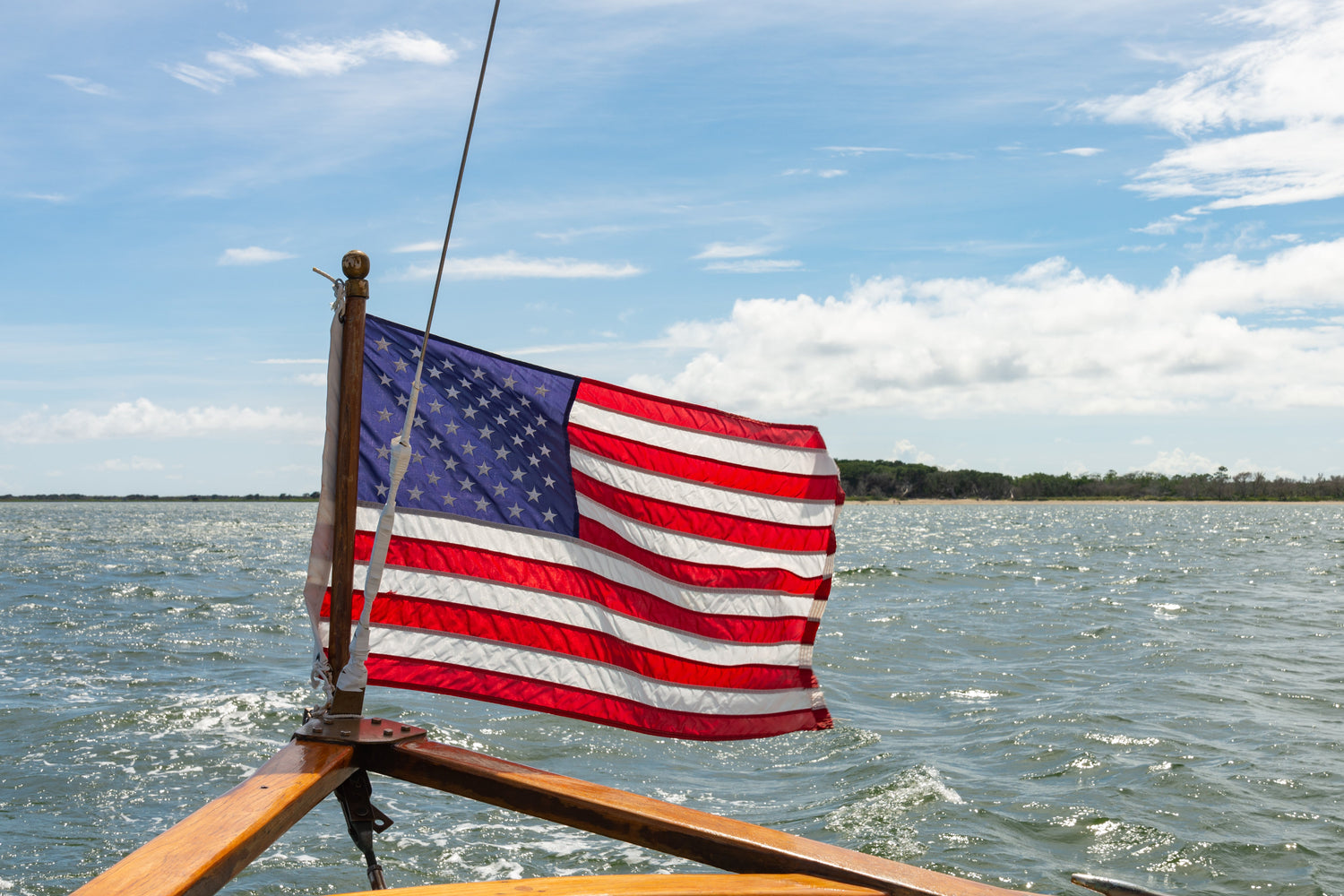
If you look closely at a government-issued flag, you see a clear pattern. The stripes always alternate red and white. Red sits at the top, and red sits at the bottom. There are seven red stripes in total and six white stripes in between.
The proportions are precise. Each stripe measures one-thirteenth of the flag’s height. When you see a full-size government flag, the stripes create a steady rhythm from top to bottom.
Then there is the union, the blue field. It covers the top seven stripes. That means the canton sits over four red stripes and three white stripes. It spans two-fifths of the flag’s length.
So the pattern works like a grid. It stays clean and balanced. It is easy to read from a distance. That is the point. A flag must communicate in a split second.
Stars and Stripes Together: What Changes and What Stays

The star count shifts with history, while the stripes tell you where the country started. Since 1818, the stripes have stayed fixed at thirteen. That rule honors the founding colonies. It also keeps the design simple and stable.
The stars are the flexible part. Each new state adds one, but only on July 4th. You see the nation’s growth stitched into the union, one white star at a time.
What never wavers are the thirteen horizontal stripes that alternate red and white. The pattern follows white stars on a blue field. The law spells it out clearly. Kengla uses that legal definition as our reference point for the American-Made flags and historical replicas we carry.
Reading Meaning Without the Myths
The stripes represent the thirteen colonies, and that part is a historical fact. But you have likely seen other claims about the colors. Many people say red stands for valor, white for purity, and blue for justice. Those lines appear in school posters and community displays, and they stay popular because they sound tidy and symbolic.
Here is what we know with certainty. United States law does not assign color symbolism to the stripes or the field. The idea that the Founders created official color meanings still circulates, but there is no legal or historical document that confirms it. The confirmed meaning is the thirteen stripes for the thirteen colonies. That is the anchor that has held from the start.
So when we talk about the flag, we stay with what is confirmed. Thirteen stripes. Thirteen colonies. Stars for the states. A design that grew with the nation but held its early foundation. When writing or teaching, we should add context by showing how the design evolved and sharing the history as it is. It keeps the story honest and keeps the symbol inclusive for everyone.
Orientation and Respectful Display of the Flag
The layout of the flag helps guide how it should be displayed. When you hang the flag horizontally, the union sits at the viewer’s upper left. The same rule applies when it hangs vertically. The viewer’s perspective stays the guide. This simple rule supports the American flag stars and stripes' meaning by keeping the union in a place of honor.
Keep the stripes clean and off the ground. Replace the flag when it becomes too worn to represent the nation with care. Retire it with respect. Many local groups and civic clubs can help with that process.
We learned that from a neighbor who volunteered with a civic club that handled retirements every spring. It was a simple act and a shared gesture that stayed with us.
Spotting a Well-Made Flag With Stripes That Honor the Spec
A good American flag respects the original pattern. It also stands up to weather, wind, and daily wear. Look for thirteen sewn stripes. Quality outdoor nylon should be fast-drying and built for real weather. Look for strong grommets or a sturdy heading, along with reinforced stitching along the fly end. These choices matter because they keep the stripes from fading or fraying before their time.
We partner with trusted U.S. makers who meet these standards. On our All-Weather Nylon American Flag page, you can see the specifics clearly. Made in the U.S.A. Solar-resistant nylon. Durable 200 denier. Sewn red and white stripes.
It’s a made-in-USA, all-weather flag designed for everyday outdoor use at homes, schools, and in the public life of parades, memorials, and civic events. A simple, strong choice that honors the design with care.
Fly the Stars and Stripes with Care

Understanding the thirteen stripes helps you see the flag in a clearer way. You recognize the history stitched into its pattern. You notice the balance between the union and the stripes. You appreciate the law behind the design.
When you raise it, you carry a piece of that story. You share it with neighbors. You set a tone of respect.
If you are ready to choose a flag that meets the federal spec and features the full 13 red and white stripes, we welcome you to browse our American Flag Collection.


