


The South Korea Flag: Taegeuk and Trigrams: Philosophy in Flag Design
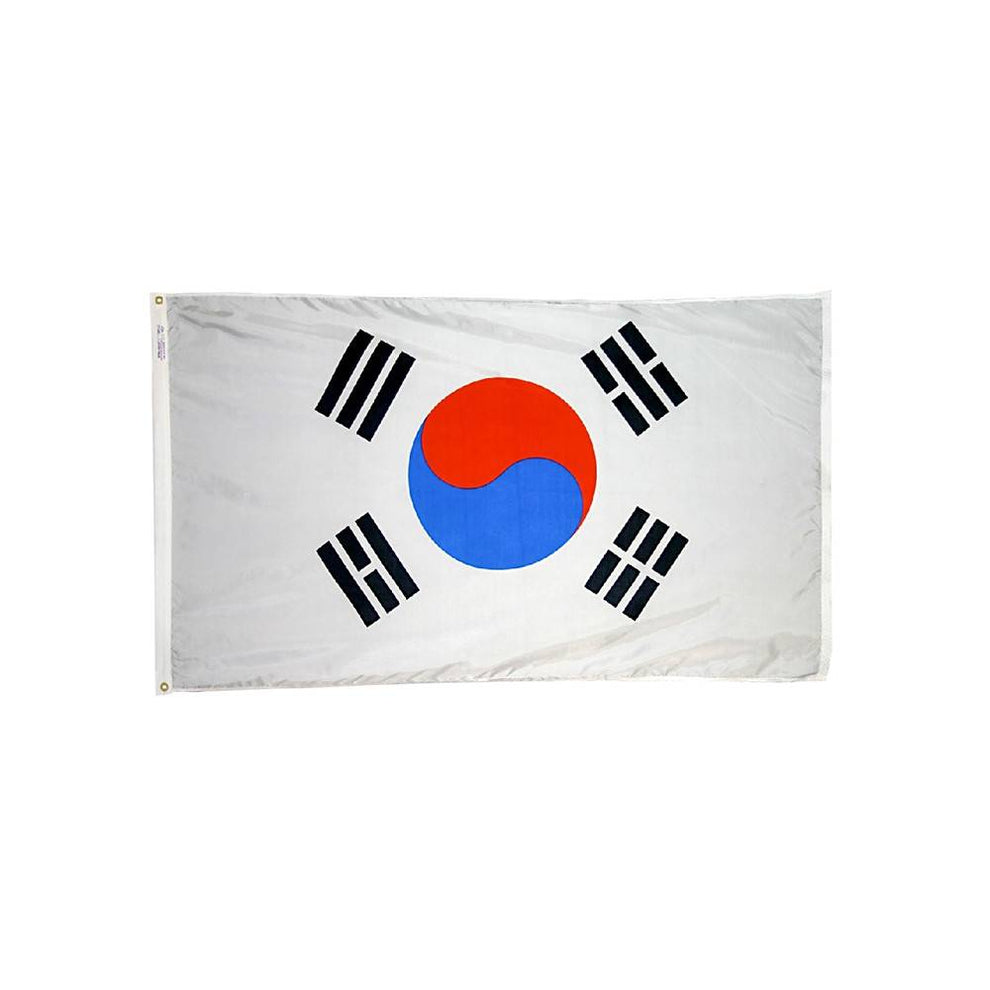
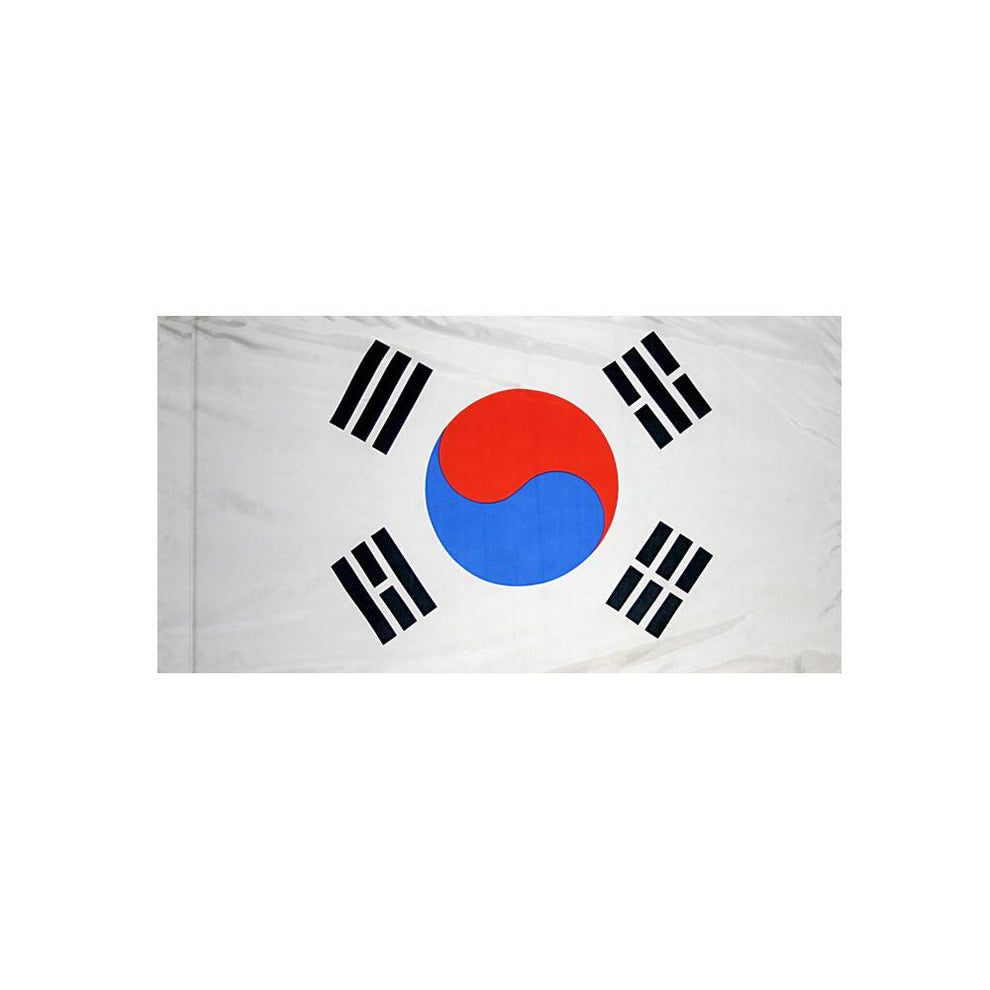
At first glance, the South Korea flag looks almost minimal with a white field, a circular red and blue symbol in the center, and four clusters of black lines in the corners. It looks clean, calm, and quietly striking. But every element on this flag was chosen with intention, and the more you look, the more deliberate it becomes.
In this blog, we will walk through the South Korea flag from top to bottom: what it is called, what the colors represent, what the Taegeuk symbol means, and how those four corner trigrams bring the whole design together. By the end, you will have a clear understanding of one of the most philosophically layered flag designs in the world.
What is the South Korea Flag Called?
The official name is Taegeukgi. Break it down, and you get the whole picture: "taegeuk" refers to the red and blue circular symbol at the center of the flag, and "gi" simply means flag.
Many English speakers call it the Korean flag, but it is the national flag of the Republic of Korea (South Korea).
The flag has three visual components: a white background, the central red-and-blue taegeuk, and four black trigrams, one in each corner. Those three elements work together as a system, not as separate decorations placed side by side. That is where the Korean flag's meaning begins: balance, relationship, and harmony.
What the South Korea Flag Colors Represent
The South Korea flag colors carry specific symbolism rooted in Korean tradition, not in political ideology or general convention.
White
White represents brightness, purity, and peace. It has long been associated with the Korean national character and appears in traditional dress and design throughout Korean history.
Red and Blue
Red and blue are not opposites in conflict. They represent positive and negative cosmic forces that exist in relationship with one another. Red is the positive force (yang), blue is the negative force (eum). Neither is superior; both are necessary.
Black
Black is the color of the four trigrams. It grounds the design visually and, symbolically, the trigrams represent the movement of those same cosmic forces through the natural world.
The colors are not random decorations. Together, they turn the flag into a picture of balance.
The Taegeuk Symbol at the Center
The Taegeuk symbol is the red and blue circle at the heart of the flag, and it is the element most people recognize immediately. It draws an obvious comparison to the yin and yang symbol familiar across East Asian philosophy, but it is worth being careful here. The taegeuk carries its own Korean cultural and national meaning and should not be reduced to a generic yin-yang reference.
The curved line dividing the two halves is what gives the symbol its energy. It does not show two sides in opposition. It shows two forces shaping one another: blue (eum, or negative) on the bottom, red (yang, or positive) on top, curving into each other in a way that suggests motion instead of a hard boundary.
The center of the Taegeukgi does not depict a state of stability. It depicts a dynamic one. The two forces are always in relationship, always in motion, and the flag captures that.
What Do the Four Trigrams Mean?
A trigram is a stack of three horizontal lines. Each line is either whole (unbroken) or broken, and that combination gives each trigram its meaning. There are eight possible trigrams in East Asian philosophical tradition, and four of them appear on the South Korea flag, one in each corner.
The four trigrams are collectively called geongongamri, and each represents a natural element:
- Geon (top left): Sky/heaven
- Gon (bottom right): Earth
- Gam (top right): Water
- Ri (bottom left): Fire
Together, sky, earth, water, and fire form a framework of natural harmony around the taegeuk at the center.
How to Read the Trigrams Simply
You do not need to memorize every line combination to appreciate what the trigrams do in the design. The key insight is that whole and broken lines create visual contrast and symbolic balance simultaneously.
The trigrams are not decorative stripes. They are structured symbols placed to extend the idea already running through the flag's center: opposites do not cancel each other out; they complete each other.
How Taegeukgi Became South Korea’s National Flag

Korea did not have a national flag in the modern state sense before the late 19th century. The concept of a national flag representing the country as a whole came in during a period of significant diplomatic change.
The modern Taegeukgi dates to 1882, when Park Yeong-hyo used a four-trigram flag version during a diplomatic mission to Japan. King Gojong issued a royal order in 1883 establishing it as the national flag.
The design varied in the years that followed, before more formal standardization arrived, including a 1942 style guide developed during the independence movement and the 1949 National Flag Construction Guidelines issued after the Republic of Korea was established in 1948.
The flag that flies today is that standardized version, carrying more than a century of national history behind it.
Why the South Korea Flag Feels So Balanced
Put all three elements together: the white background, the red and blue taegeuk, and the four black trigrams. The design reads as a complete system. Sky and earth sit opposite each other. Water and fire do the same. Positive and negative forces turn through the center. Stillness and motion coexist.
Most national flags use color and imagery to represent a country's identity. The Taegeukgi does that, but it also encodes a philosophy. The flag is not just saying "this is Korea." It is saying something about how Korea understands the relationship between opposing forces in the world.
When and Where the South Korea Flag is Displayed
The South Korea flag appears in a wide range of settings: classrooms and geography lessons, international business environments, cultural heritage events, parades, ceremonies, and diplomatic displays.
In each of those contexts, accuracy matters. A flag displayed incorrectly or in poor condition reflects on how seriously the display is taken.
Once you understand what the flag means, choosing the right format for your specific display becomes a more meaningful decision, too.
Choosing the Right South Korea Flag for Display
The same flag can serve very different purposes depending on where and how it is used, and the right format matters.
Kengla carries South Korea flag options suited to several display needs:
- South Korea Flag with Polesleeve and Fringe: Made in the U.S.A. with high-quality, all-weather nylon, available in 3x5 ft. and 4x6 ft. sizes. Designed for indoor, parade, and ceremonial use.
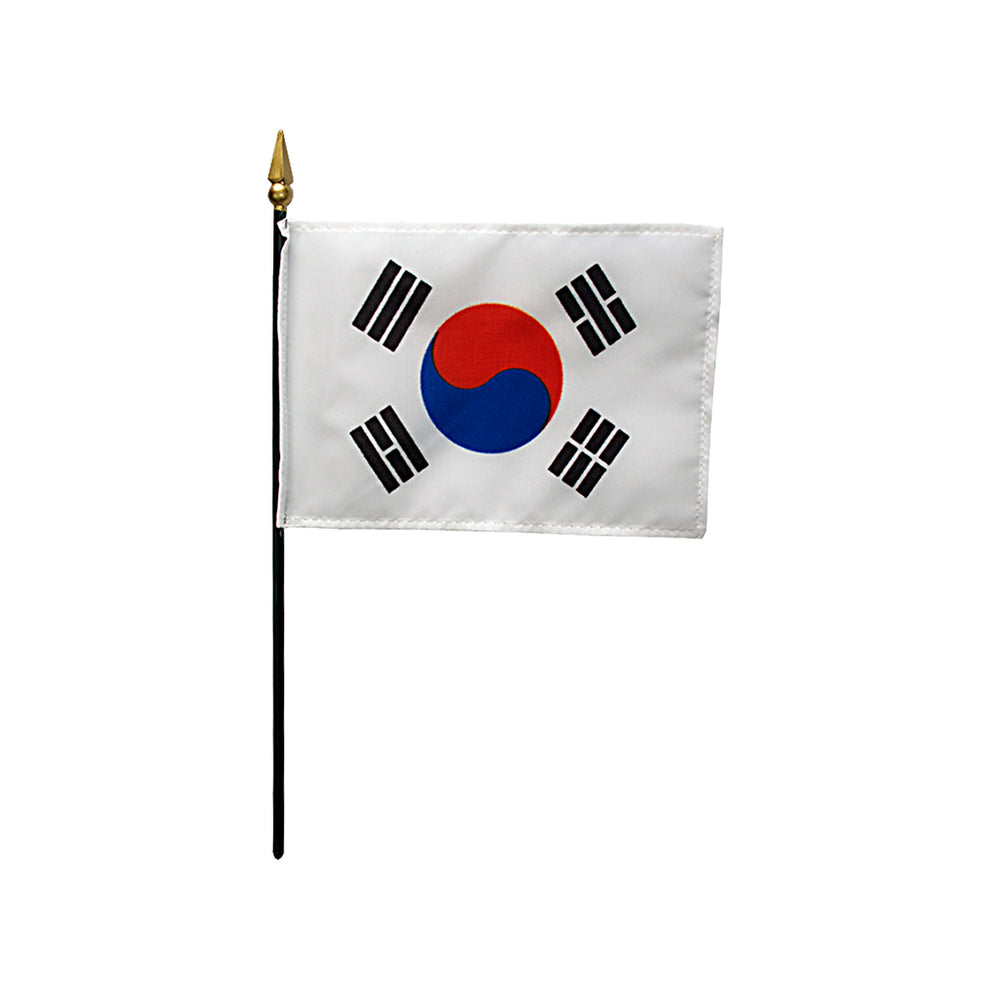
- 4x6 in. South Korea Stick Flag: Made in the U.S.A. with polyester-cotton blended fabric, stitched on all sides, and stapled to a 10 in. black plastic staff with a gold spear. Suited for desk displays, parades, and educational settings.
The goal is not just to own the flag. It is to display it well, in a format that fits where it will be seen.
Frequently Asked Questions
What is the South Korea flag called?
It is called the Taegeukgi, the national flag of the Republic of Korea.
What does the Taegeuk symbol mean?
It represents the harmony and interaction of negative and positive cosmic forces, which are always in motion and in relationship.
What do the four trigrams on the Korean flag mean?
They represent sky, earth, water, and fire, four natural elements that form harmony around the central taegeuk.
What do South Korea flag colors mean?
White represents brightness, purity, and peace. Red and blue represent positive and negative cosmic forces.
Is the South Korea flag just a yin-yang symbol?
Not exactly. The taegeuk is related to that broader philosophical tradition, but the Taegeukgi carries its own distinct Korean national and cultural meaning.
Display the Taegeukgi With Meaning and Care

The Taegeukgi is a flag of harmony, movement, nature, and identity. Its colors, symbols, and trigrams work together toward a single idea: opposites do not cancel each other out, they sustain each other.
At Kengla, we believe understanding a flag makes displaying it more meaningful. We have been serving flag buyers since 1951, and we are happy to help you find the right South Korea flag for a classroom, ceremony, parade, or cultural display, whatever your setting calls for.
Browse Kengla South Korea flag options and choose one that fits your moment and setting well.


